Poli Service Robot:
From the Lab to the Real World
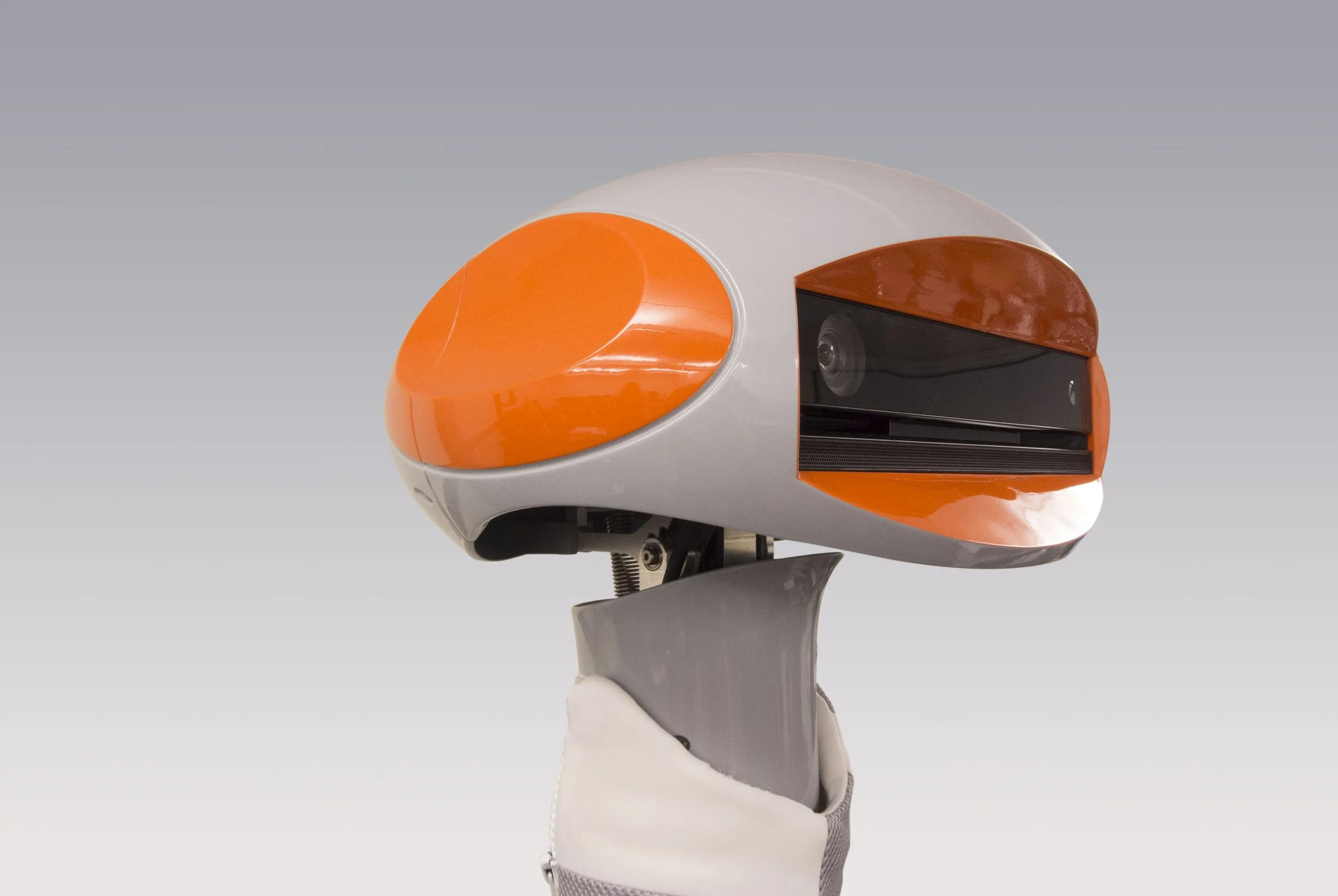
Shell design for a socially intelligent hospital assistant robot
Poli is an autonomous service robot developed at the University of Texas at Austin in the Socially Intelligent Machines Lab led by Andrea Thomaz. The project explored how form, materials, and expressive cues can help robots function as teammates alongside nurses and hospital staff.
Designing Robots for Human Environments
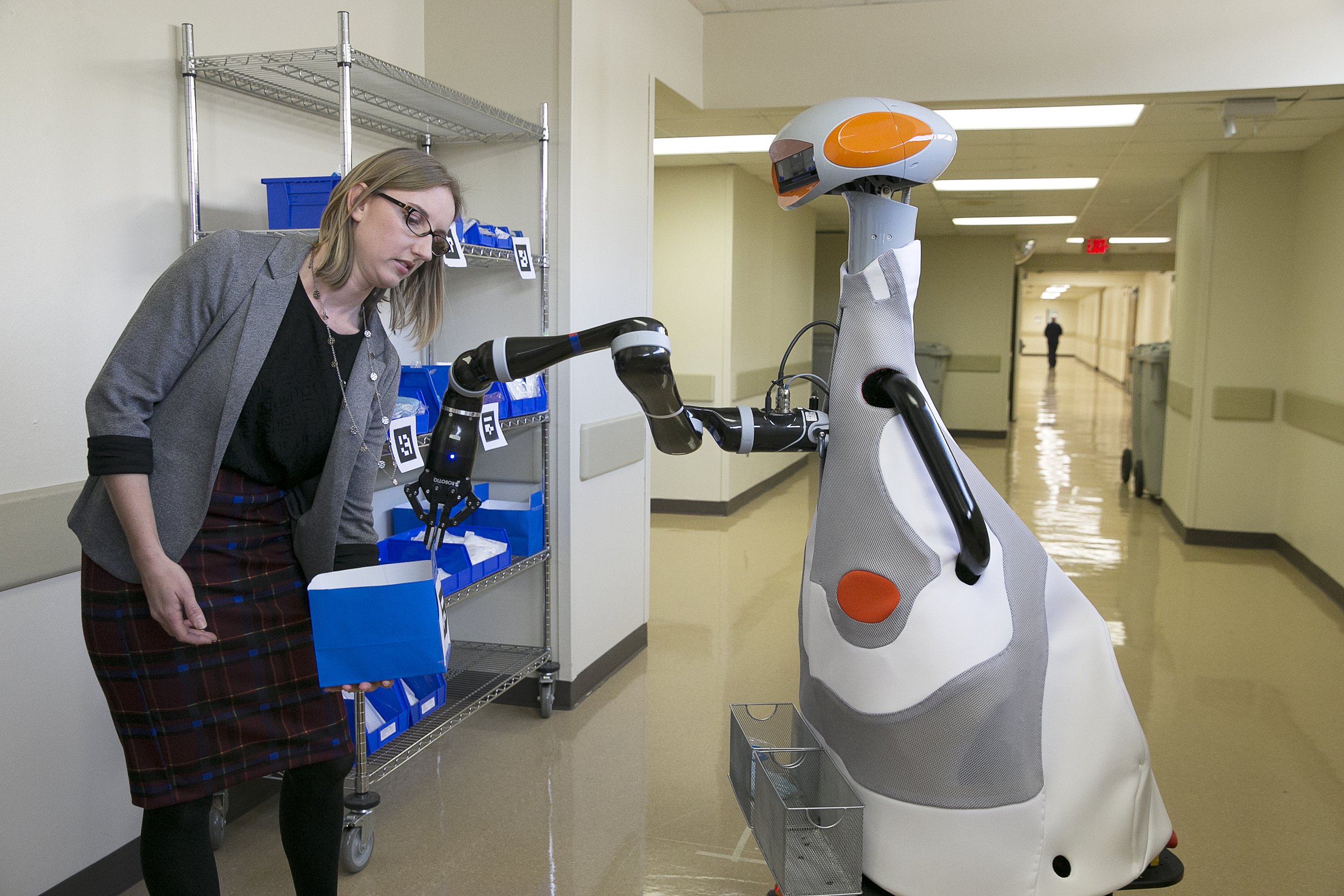
Poli was developed as a research platform to explore how autonomous robots could support people in complex service environments such as hospitals. The robot was deployed in a variety of settings—including hospital corridors, public lobbies, cafés, and accessibility assistance scenarios—to study how people interact with robots moving through everyday spaces.
Soft Robotics Aesthetics
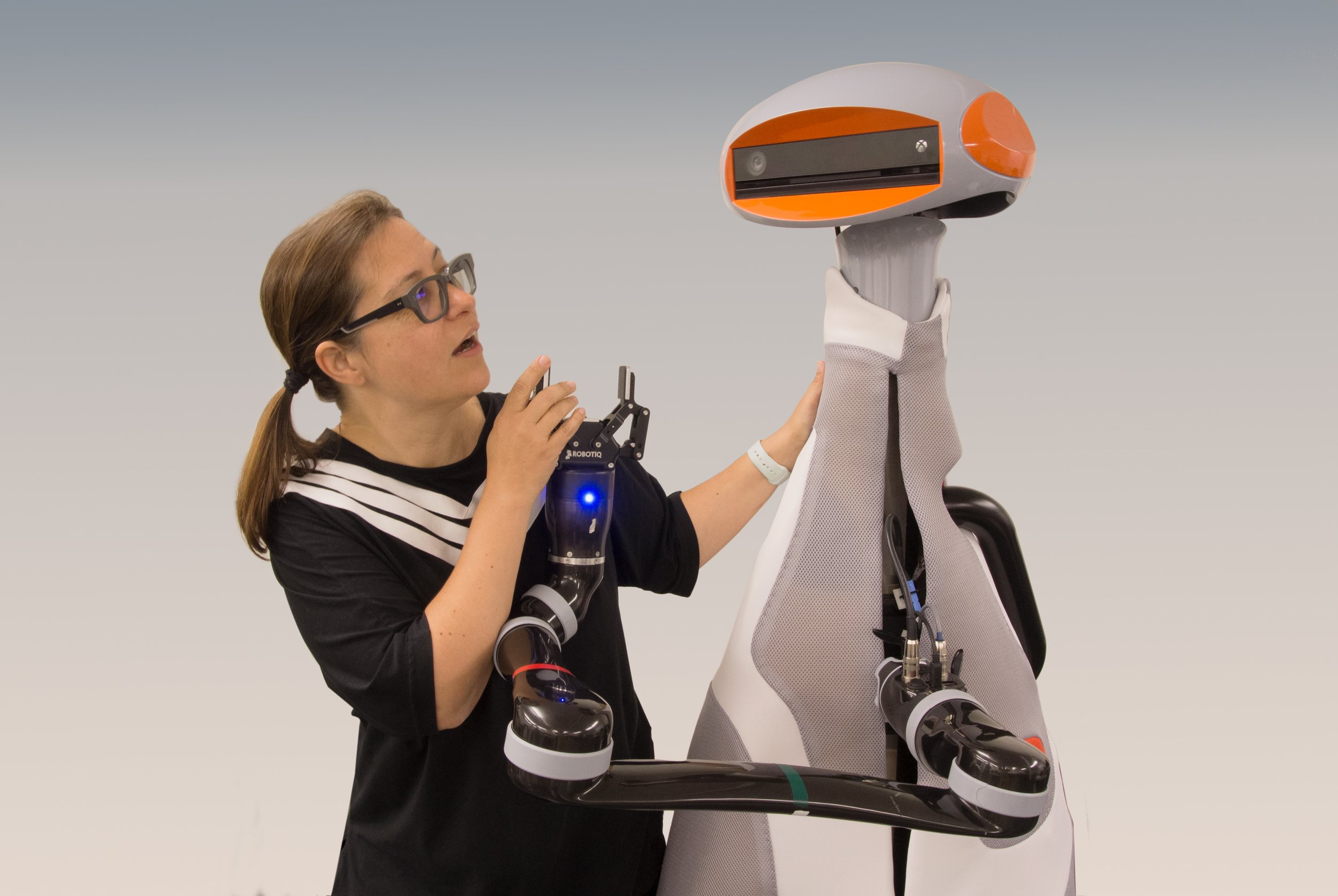
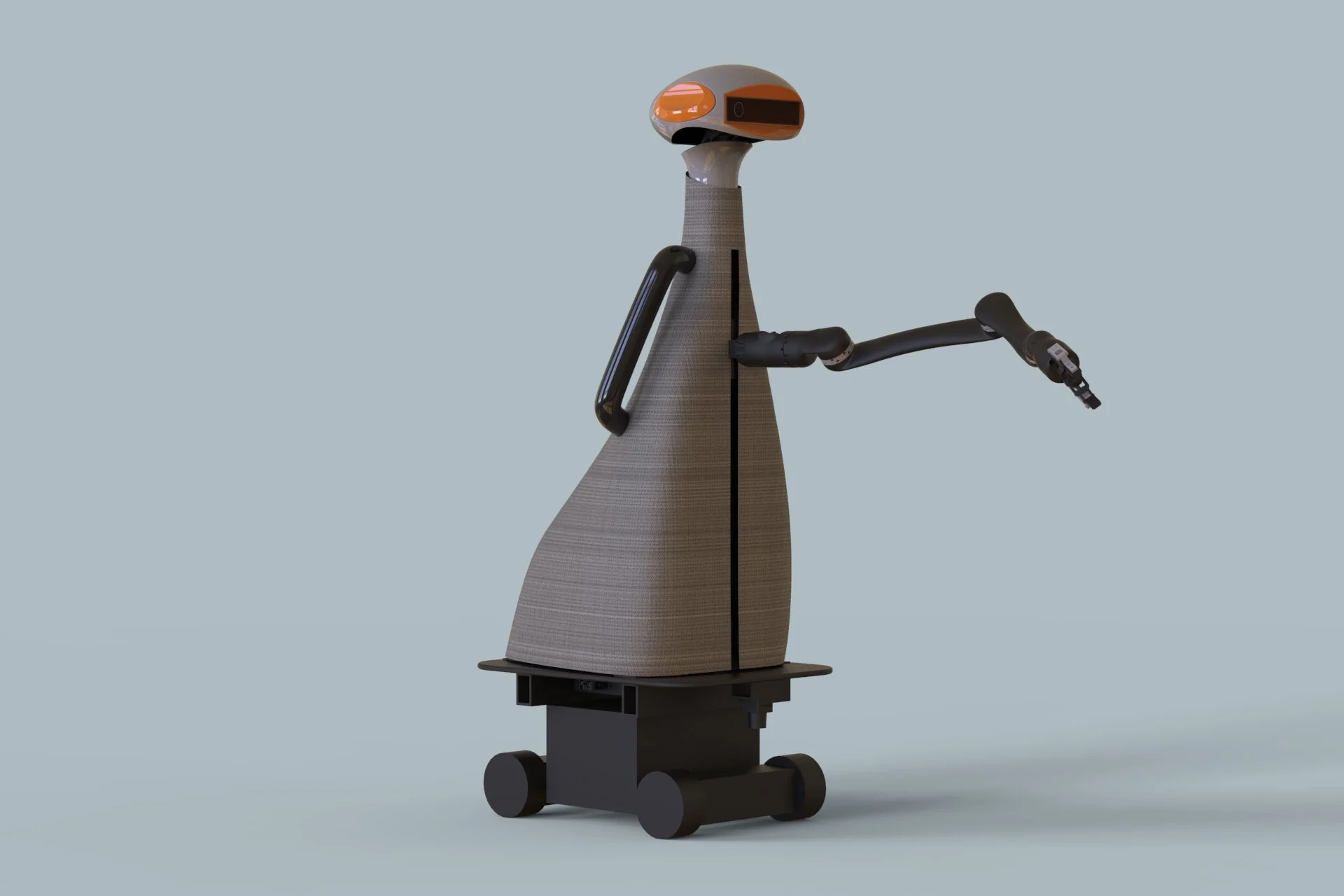
One of the design goals was to move away from the hard mechanical appearance typical of service robots. The shell design incorporated smooth geometry and soft materials, including a custom neoprene covering developed in collaboration with Amy Lynn-Stoltzfus. This gave the robot a warmer and more approachable presence while maintaining the durability required for a research platform operating in public environments.
Legible Perception
The head design was shaped to clearly communicate the robot’s sensing capabilities. Bold forms on the sides suggest ear-like structures, helping people intuitively understand that the robot is “listening,” while the front geometry clarifies the robot’s field of vision.
From Research to Real-World Robots
Insights from the Poli research platform contributed to early thinking that ultimately led to the development of Moxi, the hospital logistics robot developed by Diligent Robotics to reduce nurse burnout by handling routine delivery tasks.
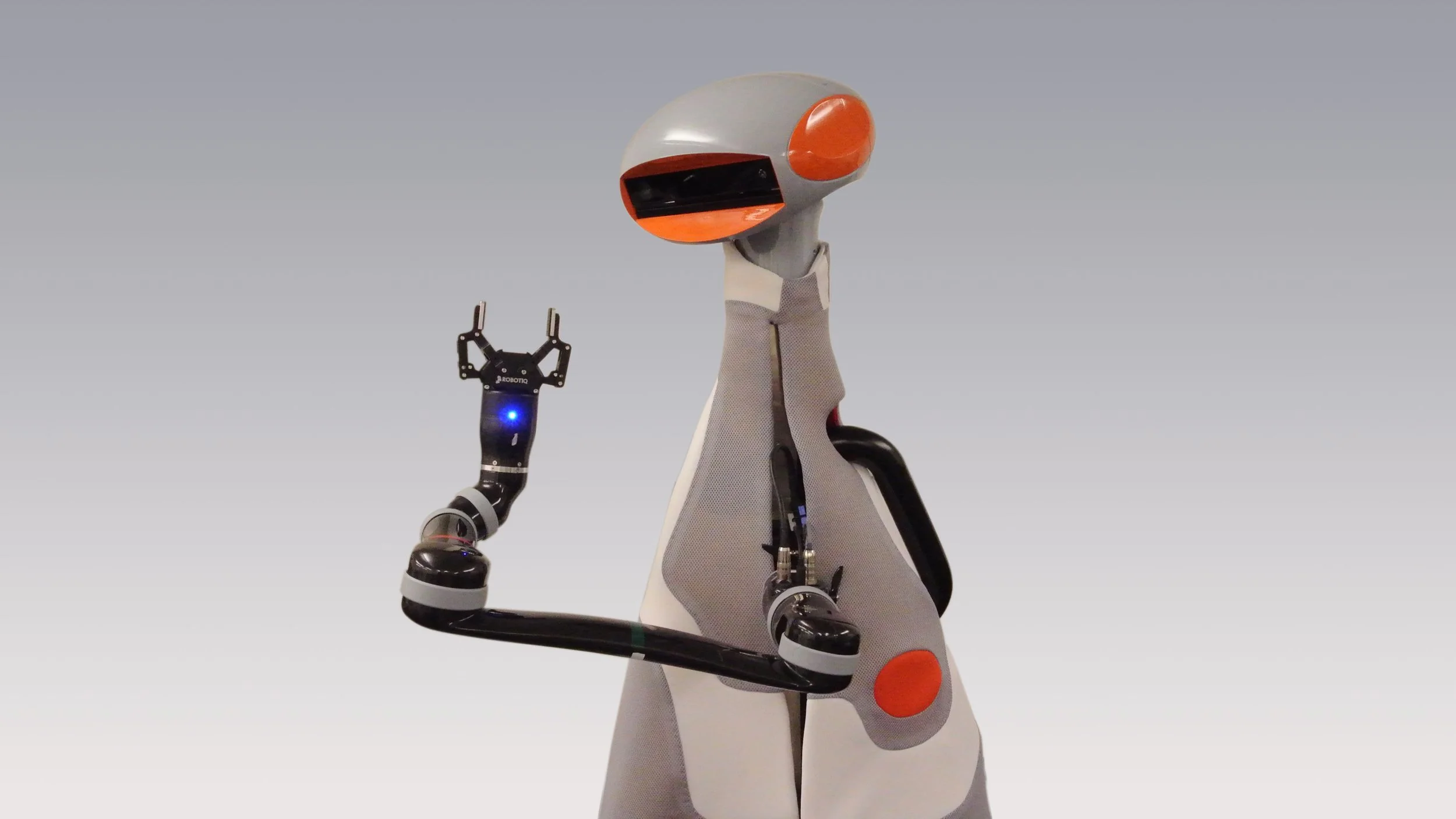
Diligent Robotics co-founder Andrea Thomaz describes Moxi in the hospital environment.